




Most people give Milan a day when they arrive, and leave thinking they might have missed something. They usually have. Not because the city is big and the important areas are hard to cover; but because without a plan, it’s easy to spend three hours running around and two more queuing for a ticket you could have prebooked but decided to take it in a last minute.
When done right, a single day in Milan is genuinely enough to feel the city and feel its charm. There are some important monuments and areas you need to cover and should not miss when you visit Milan (especially if you come for a culture visit, not for the fashion week).
Here are the must see’s of Milan.
The Duomo di Milano: the cathedral that took six centuries to finish
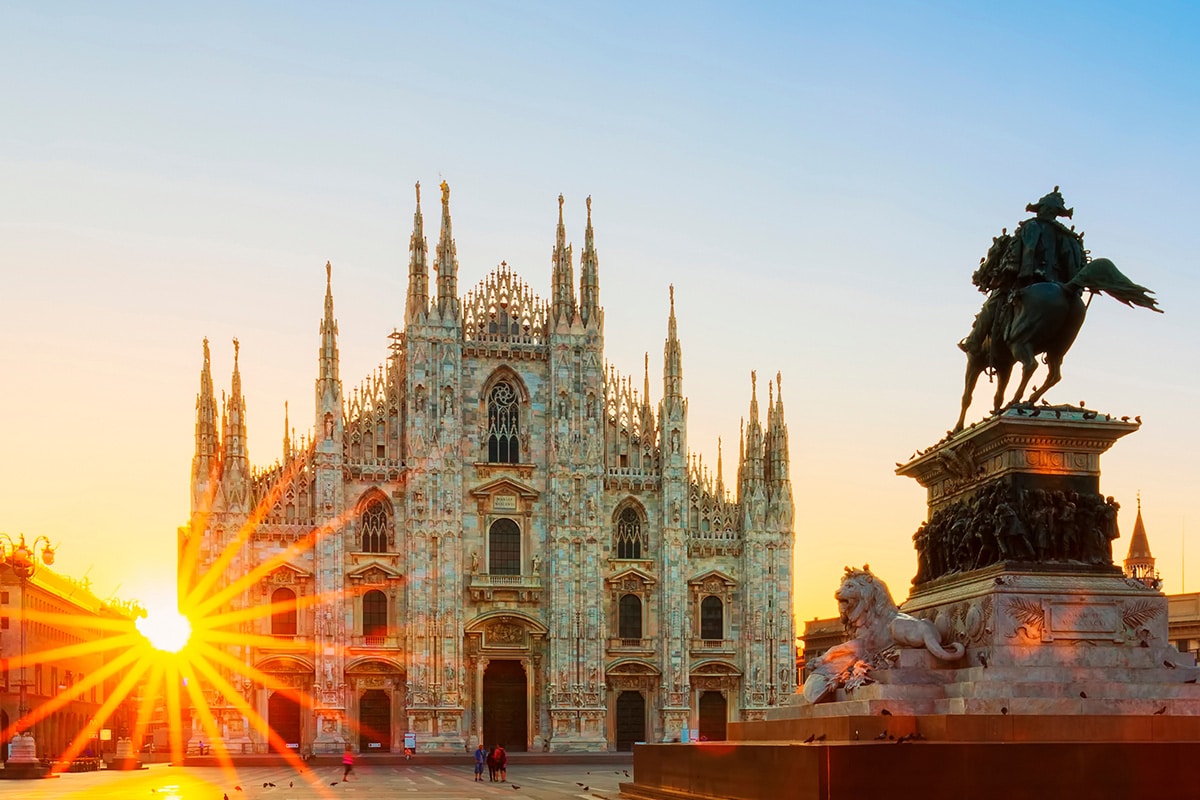
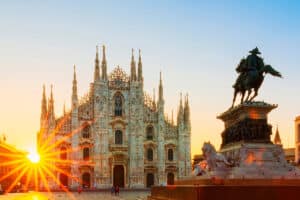
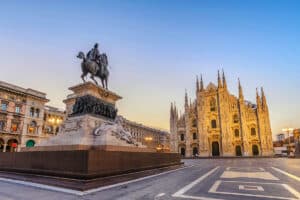
The Piazza del Duomo is where everyone must see when in Milan. The cathedral rising above it is not just large, it is one of the largest Gothic churches ever built, the third biggest Catholic cathedral in the world by interior volume, after St Peter’s in Rome and the Primada de España in Seville. It can hold up to 40,000 people.
Construction began in 1386 under the Duke of Milan, who wanted a cathedral worthy of one of Europe’s most powerful cities. What followed was nearly six centuries of continuous work. Different architects, different eras, different interpretations of the Gothic style. All of it somehow cohering into a building that feels impossibly unified from the outside. The final copper doors were installed in 1965. The cathedral that took 579 years to finish.
The exterior is made almost entirely of Candoglia marble which is a pink white stone quarried near Lake Maggiore and transported to Milan by canal since the 14th century. There are 135 marble spires on the roof and 3,400 statues on the exterior and this is the highest concentration of statuary of any Gothic building in the world. On the tallest spire, 108 metres above the piazza, stands the Madonnina: a gilded copper statue of the Virgin Mary that has been Milan’s guardian since 1774.
Did you know by Milanese tradition, no building in the city was permitted to be taller than the Madonnina?
This changed until the Pirelli skyscraper broke the rule in 1958.
If you wish to also visit the terraces, we suggest you to book rooftop access in advance. Walking among the forest of marble spires above the city, and the Madonnina close enough to examine in detail, is one of those experiences that stays with you long after the rest of the day has blurred.
The Galleria Vittorio Emanuele II
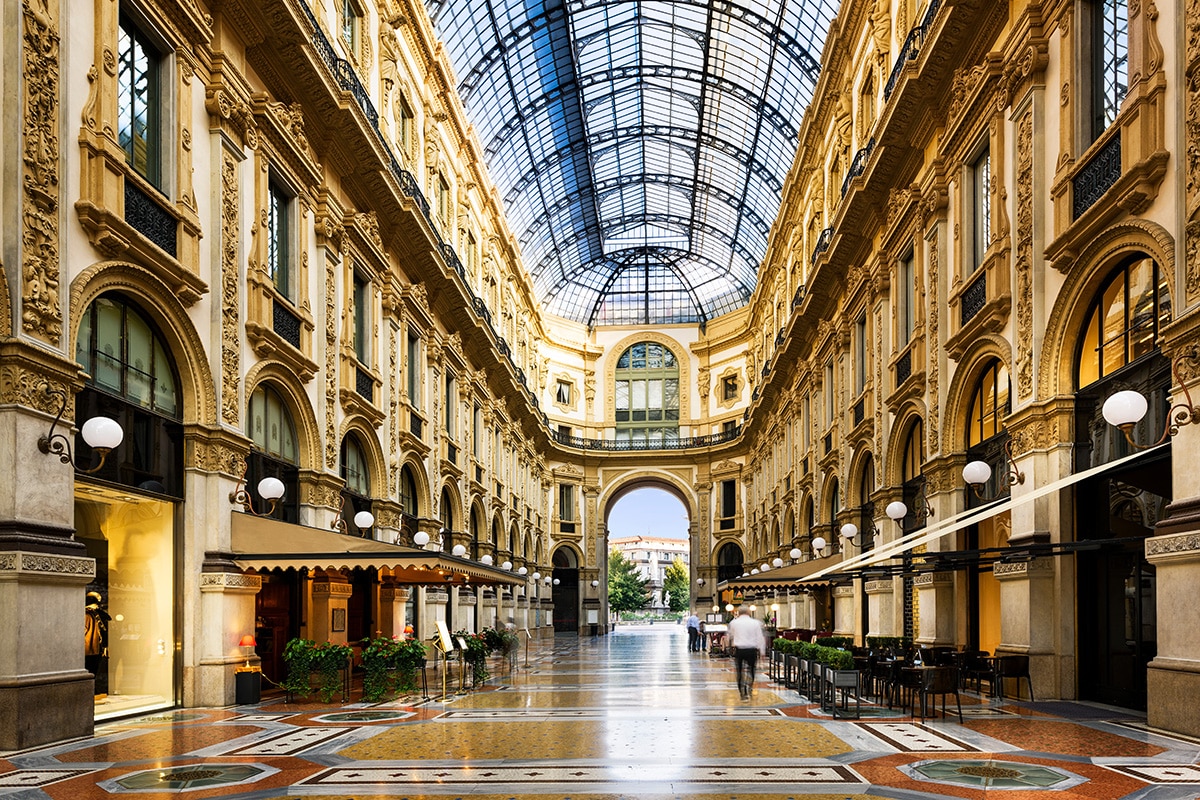
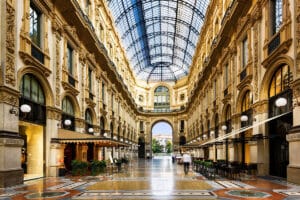
Right next to the Duomo sits what may be the world’s oldest shopping mall, and by far the most beautiful. Built in 1877, the Galleria links the Piazza del Duomo to the Piazza della Scala with a stunning iron and glass arcade. The central octagon, rising 47 metres to a glass dome, floods the arcade below with natural light regardless of the season.
The Galleria was named after the first king of unified Italy, Vittorio Emanuele II, and its opening in 1867 was a civic statement as much as a commercial one. It is a proof that the newly unified nation’s capital of fashion and finance could build something worthy of Paris or London. The four arms of the cross represent the original capitals of unified Italy: Rome, Florence, Turin, and Milan.
Also did you know the floor of the central octagon contains one of Milan’s most durable traditions? A mosaic bull, representing Turin’s coat of arms, and Milanese residents spin on for good luck.
Leonardo’s Last Supper
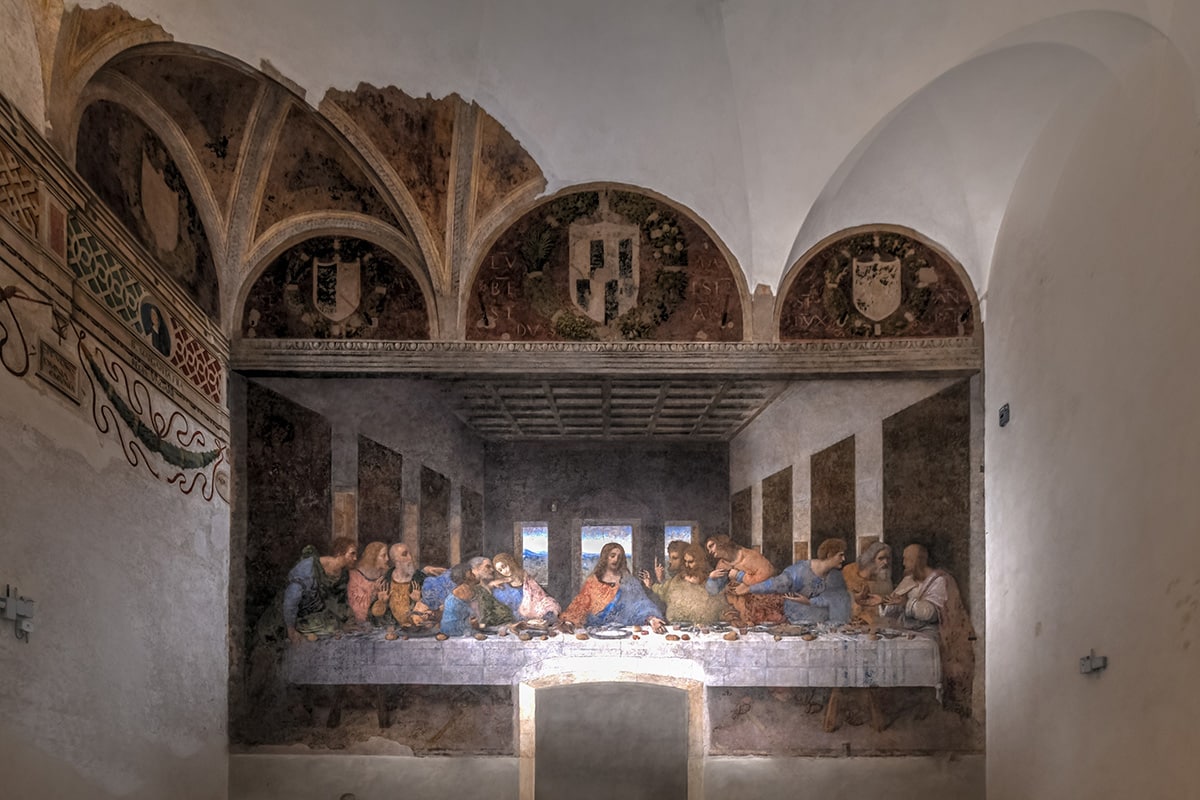
No other artwork in Milan comes close. Leonardo da Vinci painted The Last Supper directly onto the refectory wall of Santa Maria delle Grazie between 1495 and 1498, and the fresco has survived floods, bombs, and centuries of humidity.
Leonardo used an experimental technique rather than the established fresco method. Traditional fresco required painting on wet plaster rapidly, section by section. Leonardo wanted the ability to revise, refine, and reconsider. At the end he applied tempera and oil over a dry plaster preparation. The result, in his lifetime, was a painting of unprecedented psychological depth and compositional complexity.
The painting shows the moment described in the Gospel of John when Jesus tells his disciples that one of them will betray him. Leonardo arranges all thirteen figures in a continuous dramatic wave of reaction: shock, denial, anger, grief, guilt. All radiating outward from Christ at the centre.
We can write about it pages but maybe better to see yourself, right? However, entry is strictly limited, only 30 visitors allowed in at a time… so prebooking is not optional. It is essential.
The Castello Sforzesco and Sempione Park
The castello gives you another layer of Milan’s story.
The original castle was built on this site by the Visconti family in the 14th century. However, what you see today is largely the work of the Sforza dynasty, who rebuilt and expanded it from 1450 onwards. Leonardo da Vinci himself worked at the Sforza court for nearly two decades, designing theatrical machinery, hydraulic systems. Of course he also painted ceiling of interlocking mulberry trees with gold ropes that is one of the strangest and most beautiful rooms in Italian art.
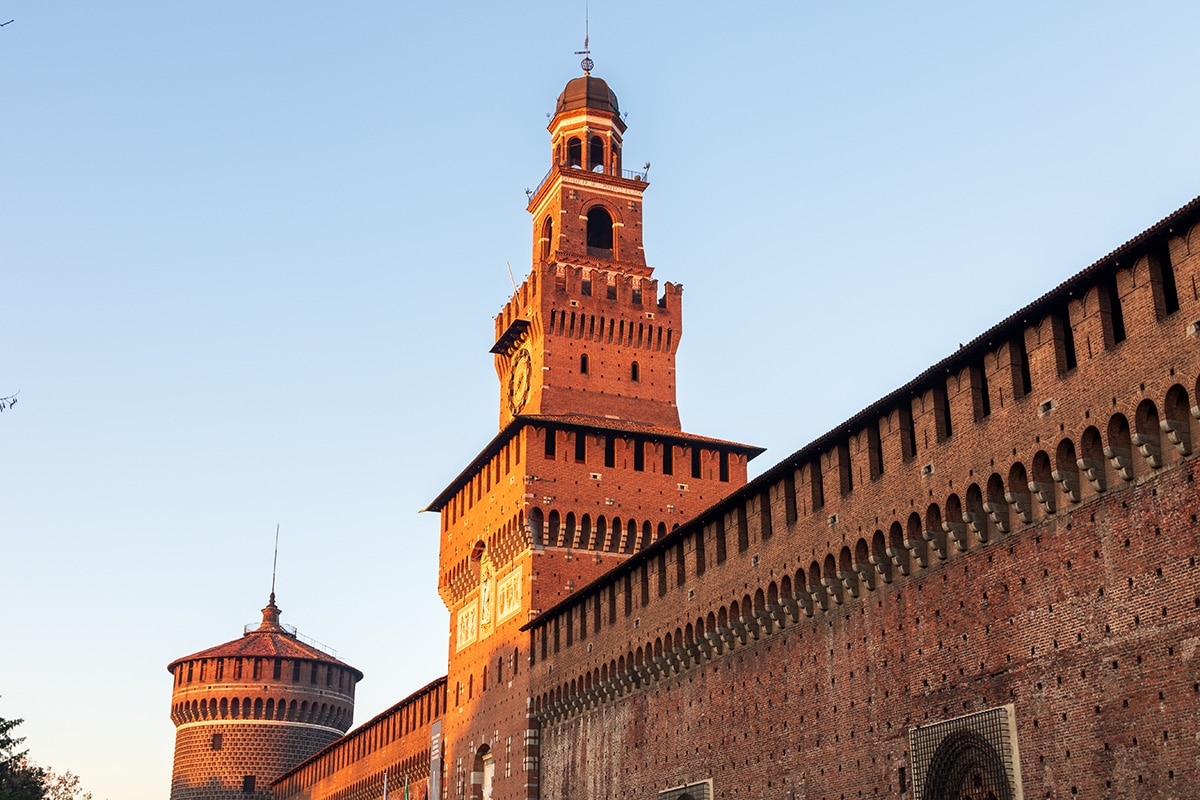
The castle now houses a series of museums, but the most important single object inside it is Michelangelo’s Rondanini Pietà which is his final work.
Beyond the castle walls, the Parco Sempione stretches across 47 hectares of English style parkland. The park is designed in 1888 on the site of the Sforza’s old hunting grounds. It is where locals escape on weekday afternoons.
How to make the most of it
The honest challenge with Milan is not what to see.It is how to connect it all without wasting your day on logistics. A guided day tour handles the routing, the skip the line access, and the storytelling, so you arrive at each stop with context instead of a map and a guess. If you want to make most of your visit of Milan book the Milan in One Day guided tour with us!