





Most people who visit Verona spend their time in the city itself. The famous Arena, the Piazza Bra, Juliet’s House, the beautiful medieval streets. All of that is worth your time.
However, did you know just 15 minutes northwest of the city, in the hills that rise toward the Lessini Mountains, there is a wine region that makes some of the most distinctive and technically ambitious red wines in Italy?
Unfortunately if you are not a wine enthusiast, you may not know it and give the appreciation it deserves. Valpolicella, and more specifically, Amarone.

The geography: hills, limestone, and cold mountain air
Valpolicella name derives from the Latin vallis polis cellae, meaning “valley of many cellars”. Valpolicella is a hilly territory stretching northwest from Verona across five main valleys carved by rivers descending from the Lessini plateau. The Classico zone, the historic heart of the appellation, covers the three innermost valleys: Negrar, Marano, and Fumane where the combination of well drained chalky limestone soils, significant altitude variation, and cold air descending from the mountains which creates growing conditions that are unlike almost anywhere else in northern Italy.
The vineyards here are trained on the traditional pergola Veronese system. In this system vines strung horizontally across overhead frames that shade the soil, slow the ripening of the grapes, and allow the fruit to hang in open air that circulates freely. It is a labour intensive system that most modern viticulture has abandoned, but in Valpolicella it persists because it produces the loose grape clusters that are essential for the winemaking technique that makes this region extraordinary.
The grapes: Corvina, Rondinella, Molinara and what makes them special
The grape varieties of Valpolicella are not internationally famous names. Corvina Veronese which is the dominant variety, typically comprising 45 to 95 percent of any blend. It is a thick skinned, deeply coloured grape with high acidity and cherry fruit character that is rarely planted anywhere outside this region. Rondinella and Molinara are the traditional blending partners, adding aromatic complexity and softening tannins respectively. Oseleta, an ancient near-extinct variety, is used by some producers to add structure and depth.
None of these grapes would attract much international attention if they were simply vinified as table wine. What makes Valpolicella remarkable is what the winemakers here have developed over centuries: a technique of drying the harvested grapes before pressing, concentrating their sugars, flavours, and structure into something that has no precise equivalent anywhere in the world.
Inside the wineries: what to expect
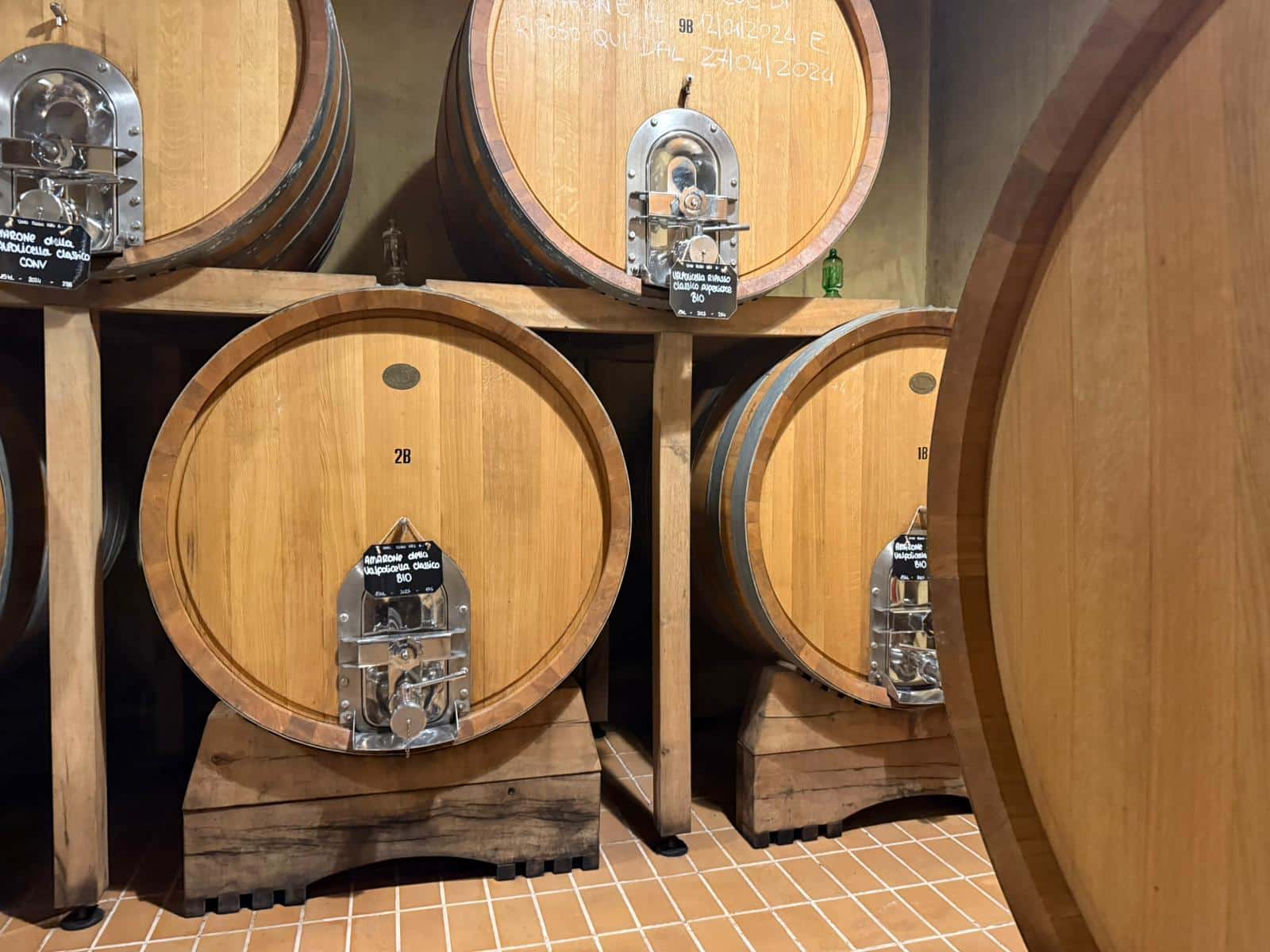

The tour visits two family-owned estates in the Valpolicella Classico zone. The wines would be tasted will include Amarone, Ripasso, and Valpolicella Classico, paired with local Venetian salumi and cheeses that the region’s winemakers have spent generations learning to eat alongside their wines.
The combination is not incidental but deliberate, the salt and fat of the charcuterie softening Amarone’s tannins in ways that make both the food and the wine taste better than they do alone.
The ageing cellars are where the investment becomes tangible. Amarone requires a minimum of two years in oak and four years total before release. Riserva DOCG must spend a minimum of seven years ageing. Walking through a cellar stacked with large oak barrels or Allier barriques, understanding the timescale involved and the patience it demands, gives the wine in your glass a different quality of meaning.

The practical case for a half day tour
The tour runs at 8:30am and 2:00pm from Piazza Bra in Verona meaning you can pair it with a morning in the city, or finish your day in Verona after the afternoon departure. Four and a half hours, two wineries and a landscape of rolling vineyards and limestone hillsides that looks exactly like what a wine region should look like when it is doing everything right.
Would not you learn about this amazing wine, the technique Appassimento and many more?
👉 Book the Valpolicella & Amarone half-day tour from Verona →


